
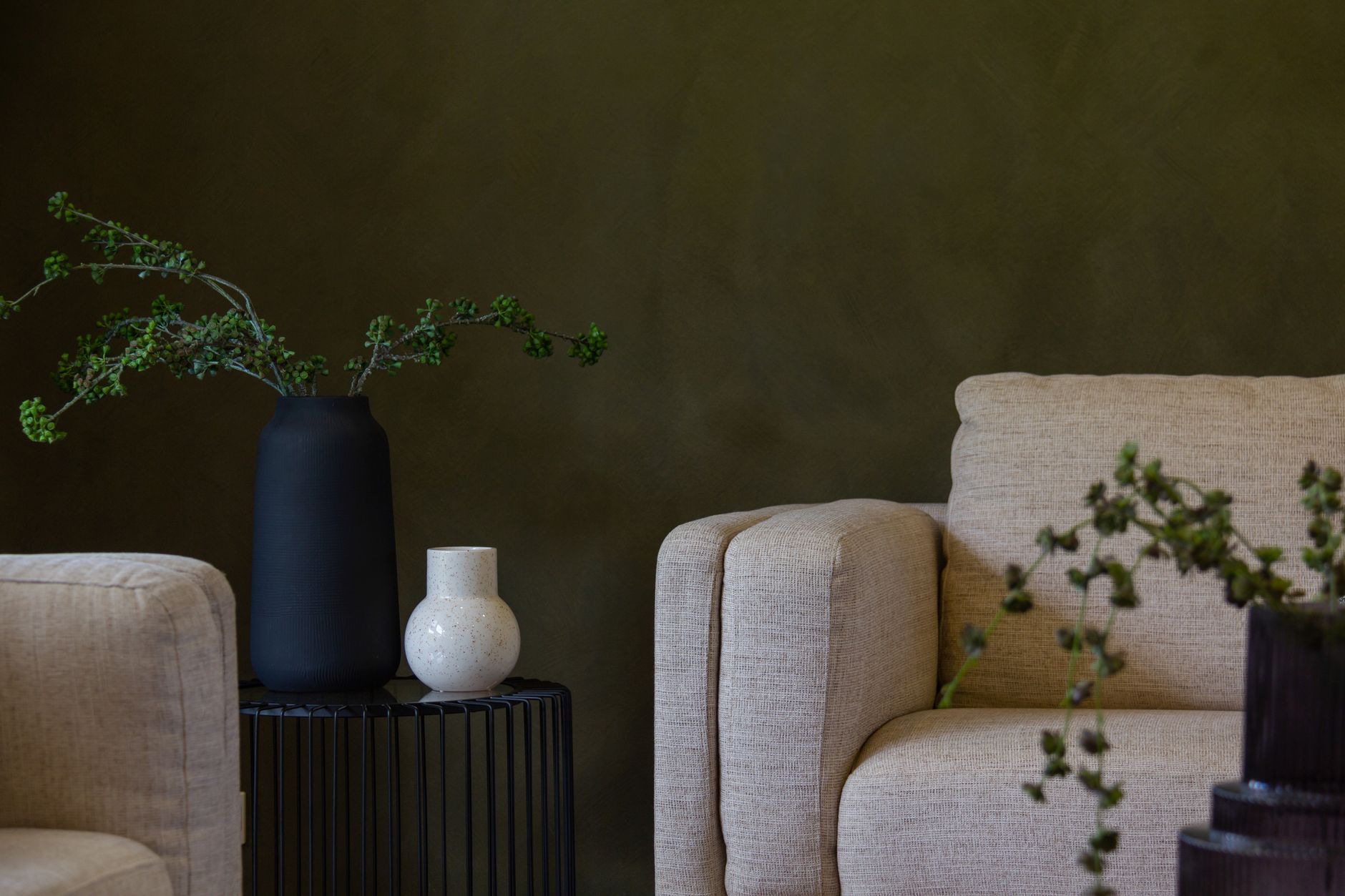
You might know this: after a hard period – a breakup, going no contact, or simply a phase of re-sorting yourself – you suddenly want to move furniture, take down pictures, or repaint a wall that never bothered you before.
That’s not a coincidence, and it’s not a shopping impulse. It’s a very direct signal from your nervous system: something in you has changed, and your home is catching up.
Why spaces shift when you do
Your home is rarely neutral. Every object in it was chosen at some point by a specific version of you – with the needs, fears, and values you had back then.
When you change but your surroundings stay the same, a kind of dissonance appears: you’re no longer the person who chose that decor, but you’re still living right in the middle of it.
Your nervous system feels this discrepancy long before you can consciously name it – often it first shows up as vague discomfort in certain rooms, or a sudden, almost impulsive urge for change.
This also explains why people so often start redesigning their homes after major life shifts – breakups, grief, going no contact, but also positive shifts like a new job or a new relationship with themselves.
It’s rarely pure aesthetics.
It’s an attempt to bring the outer space in line with the inner reality.
When it’s healthy – and when it becomes a distraction
The key distinction is between two movements: changing your space because you’ve already changed (healthy, integrating), and changing your space to try to change yourself, without doing the actual inner work (distraction, “spiritual redecorating” instead of real processing).
A new couch doesn’t resolve unprocessed grief; a fresh coat of paint doesn’t replace real boundary work.
But when redesign happens as an expression of an already ongoing inner process, it can actually support and anchor it.
How to consciously support this process
- Observe before you act. If you suddenly feel a strong urge to move or get rid of something, ask yourself briefly: what exactly is bothering me right now? The real answer is often not about the object, but about what it represents.
- Let change happen gradually. You don’t have to redesign everything at once. Replacing or changing one object at a time gives you space to consciously integrate each step, instead of falling into frantic action.
- Consciously keep something that marks your path. Not everything has to go. A single object from a past phase can serve as a deliberate anchor – proof of how far you’ve come, rather than a disturbance.
Your home doesn’t need to be constantly “finished.” It’s allowed to change along with you – as an honest mirror, not a facade.
PART OF THE CIRCLE WITH HEAL YOUR SPIRIT:
Real change shows – in your home too. Where the line between genuine inner work and pure avoidance lies is covered in our article “Spiritual Bypassing: When ‘Everything Happens for a Reason’ Becomes an Excuse to Avoid Setting Boundaries” on Heal your Spirit.
If you’re currently in the middle of your own healing process and looking for structure, our workbook “Emotional Healing After Narcissistic Abuse” guides you step by step through each phase – inside and out.
Leave a Reply