
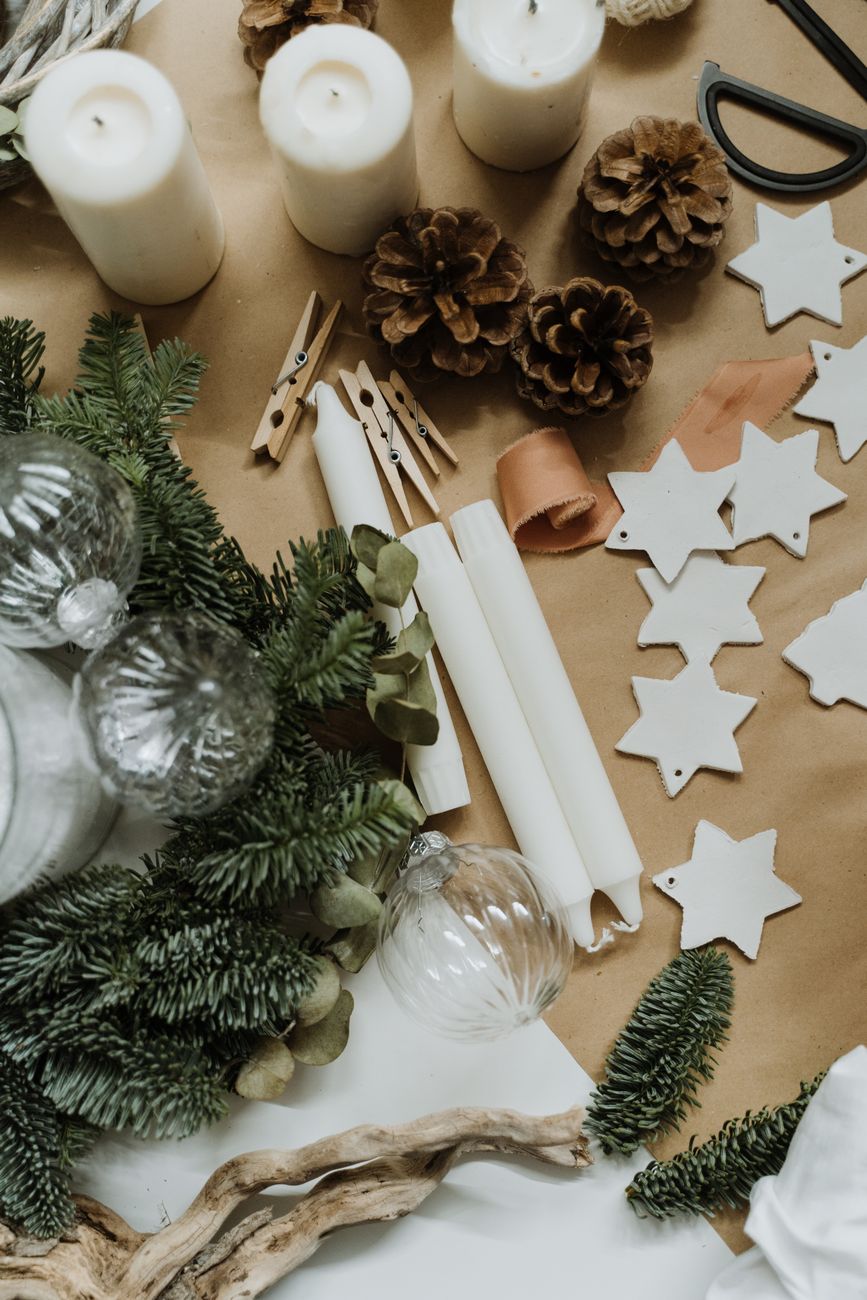
It usually starts at the end of October. The first gingerbread appears in the supermarket, Advent wreaths in this year’s trend color pop up in your feed, and somewhere between pumpkins and candlelight that quiet feeling shows up: Last year’s decorations aren’t good enough anymore. They’re not broken. They’re not ugly.
They’re just … not new.
That’s exactly where this article begins. Because while more and more people are making their own Christmas decor or deliberately buying second-hand, it’s worth taking an honest look at the question behind it: why does it even feel like we need something new every year for our home to feel festive?
The short answer: that feeling is no accident. It’s manufactured. And you’re allowed to question it without giving up on coziness.
Why new Christmas decor seems “necessary” every year
For a long time, Christmas decor was something you simply had. A box in the attic with Grandma’s baubles, the crooked straw star from elementary school, the string of lights that was always missing a bulb. Today, Christmas decor is something you re-curate every year. Several mechanisms are behind this, and they reinforce each other.
Seasonal collections instead of seasons. Home decor chains and furniture stores release their own Christmas lines every year: sage green and brass this time, burgundy and velvet the next. Your old decor hasn’t gotten worse, it’s just “so last year”. What has long been criticized as fast fashion in clothing happens almost unnoticed with decor.
The feed as a benchmark. On Pinterest, Instagram and TikTok, we see perfectly styled living rooms, often professionally photographed, sometimes paid for by brands. Next to them, our own home quickly looks unfinished. The problem isn’t the inspiration itself, but the silent message that comes with it: this is how your home should look too.
Decor as an emotional promise. Christmas is emotionally charged like hardly any other time of year. If you long for warmth, family and a sense of belonging, it’s easy to reach for things that promise exactly that. A new string of lights can create that feeling for a moment, but it can’t hold on to it.
Interestingly, many people are stepping out of this cycle right now, and not only out of conviction. According to the Simon-Kucher Christmas Study 2025, 48% of Germans planned to spend less on Christmas decorations, and 19% planned to spend nothing at all. The study’s authors see this mainly as a sign of financial strain, not just more mindful consumption.
That’s part of an honest picture too: for many people, “buying less” isn’t a lifestyle choice, but a necessity.
The DIY and second-hand wave: countermovement or new trend?
Second-hand at Christmas has long stopped being a niche topic. According to a survey by Sellpy and the German Retail Federation (HDE), 39% of Germans have already given a used Christmas gift, and 53% could imagine doing so in 2025. The shift in motives is fascinating: in 2024, sustainability was still the main reason; in 2025, uniqueness (47%) and the better price (48%) came out on top. Second-hand is no longer seen as going without, but as a treasure hunt.
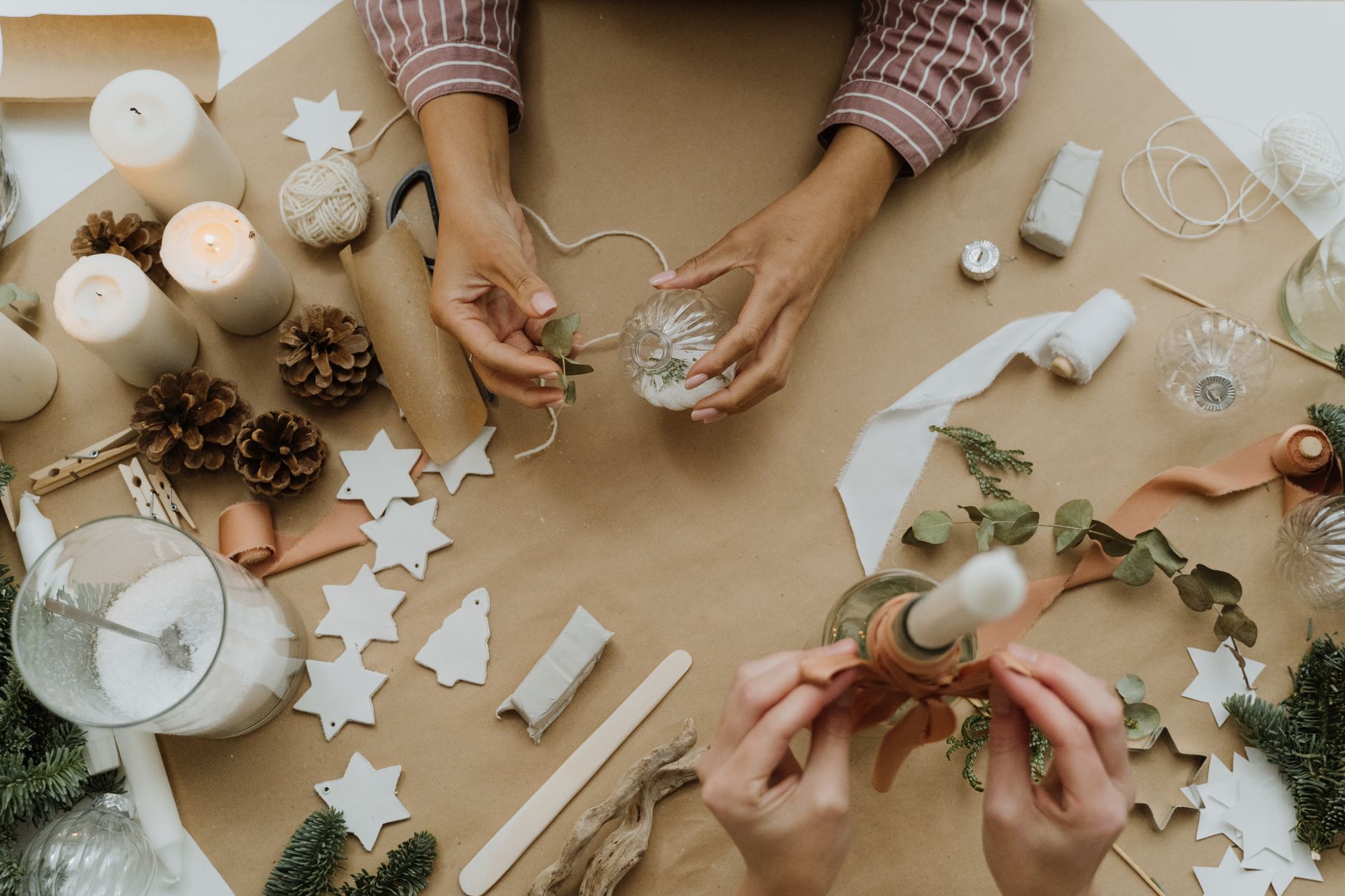
DIY is having a renaissance too: dried orange garlands, salt dough ornaments, branches in old jars. That’s lovely, and it’s real progress compared with buying new every year. Still, a critical look is worthwhile, because countermovements can be swallowed up by consumerism too.
When DIY turns into a shopping list. If you first order a craft kit, a hot glue gun, special wire, dried flowers and fake snow for a “homemade” project, you often end up buying more than you would have with a ready-made garland. DIY is only an alternative if it works with what you already have.
When second-hand turns into a hunt. Flea markets and online marketplaces can develop their own pull. The “vintage find” is a dopamine hit like any other purchase. Used is better than new, but not automatically better than nothing.
When homemade has to be perfect. Sometimes the pressure just shifts: instead of buying the right decor, now you’re supposed to craft the right decor, Pinterest-worthy, of course. Not much is gained that way.
So the real question isn’t buy or make it yourself, but: Who am I decorating for, and what do I actually want my decor to give me?
DIY Christmas decor, using what you already have
Before you buy anything, new or used, there’s a step almost everyone skips: opening your own box and looking at it with fresh eyes.
1. Take inventory instead of writing a shopping list
Take out all the decor you own and lay it out side by side. You’ll often discover pieces you haven’t used in years because they always sat in the same spot. A Christmas bauble in a glass bowl looks completely different than on the tree. Candle holders from the dining table become eye-catchers on the windowsill.
2. Nature as your material
The cheapest and most beautiful decorating material is right outside: fir branches (Christmas tree lots often give away offcuts for free), pine cones, rose hips, ivy, moss, bare branches. In a simple vase or an old mason jar, they need little more than some water. Only collect what’s plentiful, and leave protected plants alone.
3. The kitchen instead of the craft store
Dried orange slices, cinnamon sticks, star anise and nuts are decoration and fragrance at once. A salt dough made from flour, salt and water turns into ornaments that kids can help create. And the baking paper, twine and brown paper bags from your pantry become gift tags or stars.
4. Second-hand on purpose, not by chance
If you really are missing something, check flea markets, thrift stores, online marketplaces or swap groups in your neighborhood first. Many people give away entire boxes of Christmas decor in January. The trick: go with a specific gap to fill (“a candle holder for the hallway”), not with the open-ended mission “let’s see what they have”.
5. Swap instead of hoarding
Organize a small decor swap with friends or neighbors. Everyone brings what they no longer love and takes home what they like. It brings variety without a single new item having to be produced.
6. Less, but more intentional
One beautifully styled spot, say a branch with a few favorite ornaments on the dining table, often feels more festive than a home where every surface is decorated. Especially for a stressed nervous system, visual calm during the already busy Advent season is a real gift.
Decor as a ritual, not a reason to shop
Maybe that’s the real shift in perspective: Christmas decor doesn’t have to be a project that gets “better” every year. It can be a ritual that returns every year. Unpacking the same old box. The story behind the chipped glass bird. The star your child made at six that hangs a little more crooked every year.
It’s exactly this repetition that creates the feeling we’re really looking for: familiarity, reliability, a piece of home that stays while everything outside changes. New decor can surprise you. Old decor can hold you.
That doesn’t mean you can never buy anything new again. It just means you don’t have to for your home to feel festive, warm and right.
Conclusion: New things aren’t what make it festive
The pressure to redecorate every year isn’t a personal failure. It’s the result of seasonal collections, social media comparison and a longing for belonging that is easy to sell.
DIY and second-hand Christmas decor are good alternatives, as long as they don’t become the next consumer project. The most beautiful decor is often the one you already have, plus a few branches from outside and the stories you connect with it.
When the Advent season drains you more than it delights you
Sometimes the pressure to decorate is just a symptom of something bigger: an Advent season that feels like a to-do list instead of anticipation. If you notice that your nervous system is already running at full speed in November, the 7-Day Nervous System Reset can help you wind down with small daily exercises, without any pressure to be perfect.
Part of the Circle
Why do things so often promise us a feeling they can’t deliver? That’s exactly what Heal your Spirit explores: Why Spiritual Wellness Products Are Selling You a Sense of Belonging They Can’t Deliver. A look behind the marketing that uses our longing for connection.
Leave a Reply