
Part 1 of 4 in the series “Is That Art or Can It Go?”
We all know the feeling: you flip through old family photos and spot a mustard-yellow sofa in the background, a wall of dark wood paneling, and a lamp that looks like a landed spaceship. Your first thought: “How could anyone live like that?” Your second, if you’re honest: “Actually, that looks kind of cool.”
Welcome to the world of home trends that swing between cringe and cult status. In this series, we look at what we once thought was beautiful, why, and what is quietly making its way back into our living rooms.
We start with two decades that couldn’t be more different: the cozy, earthy 70s and the flashy 80s.
The 70s: Coziness on every level
The conversation pit. Introduced in modern homes from the late 1950s, it peaked in the 60s and 70s: a sunken area in the living room, upholstered and filled with cushions, where people gathered to talk, drink, and smoke. It wasn’t practical, though. It was hard to clean, and older guests struggled to climb back out. But it made a statement: this is a place for sitting together.
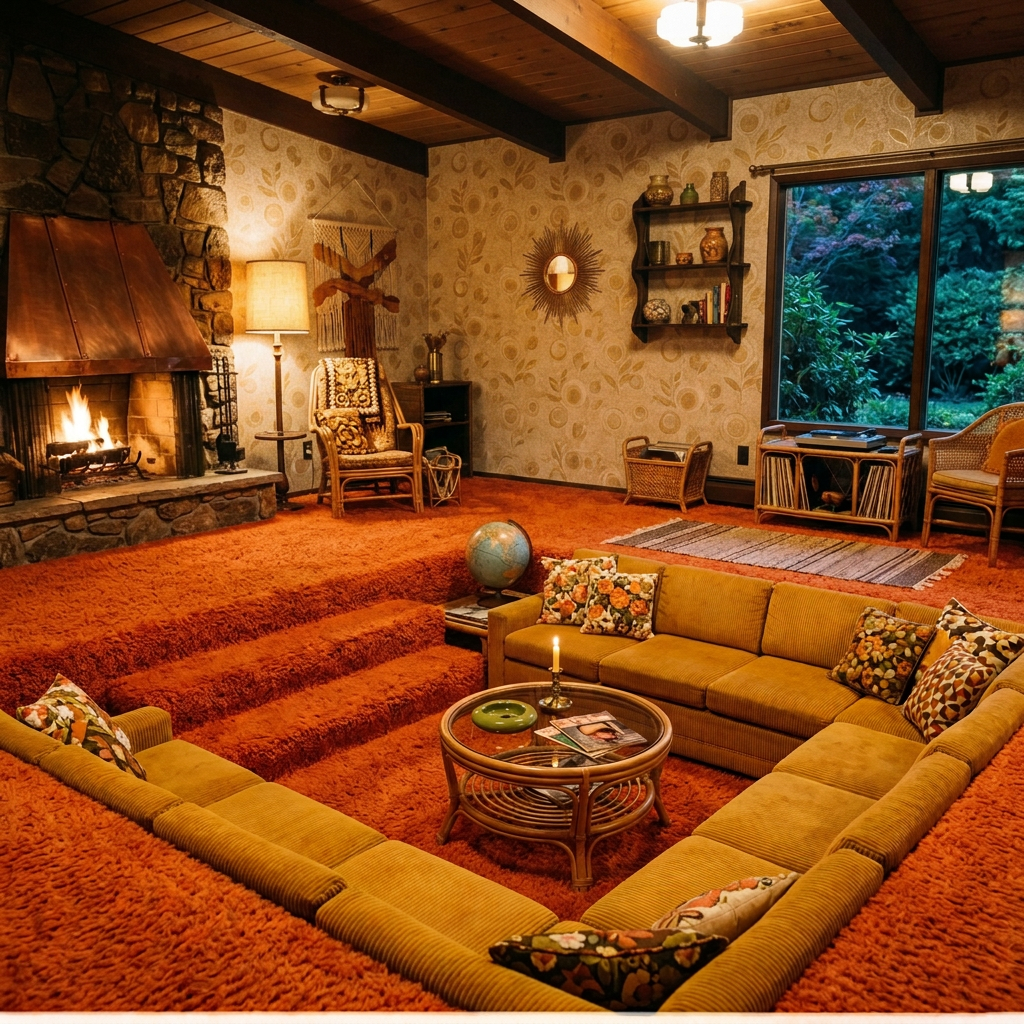
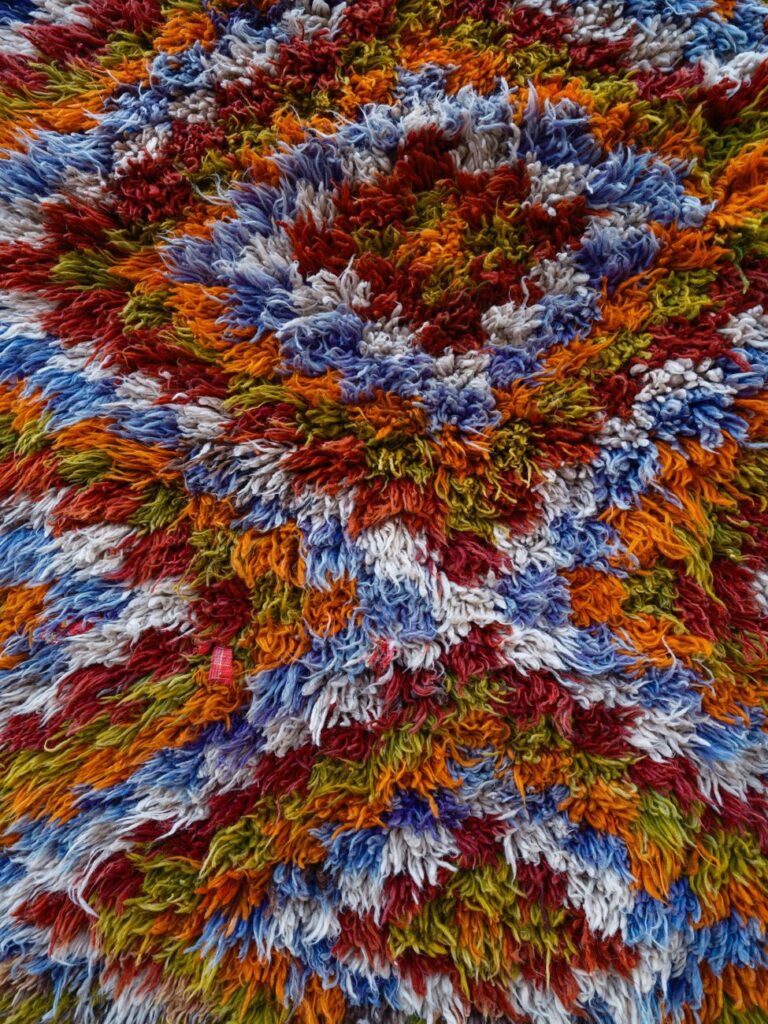
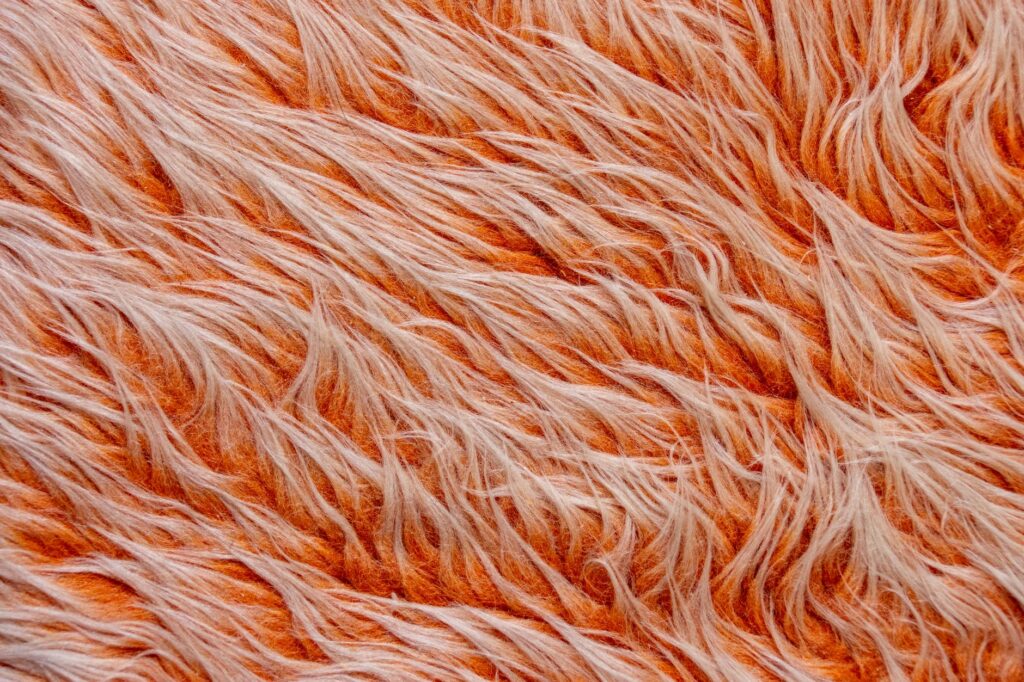
The shag carpet. Deep-pile rugs you could literally sink into were the epitome of comfort. Anyone who has ever searched for a lost toy in high pile knows why they disappeared.
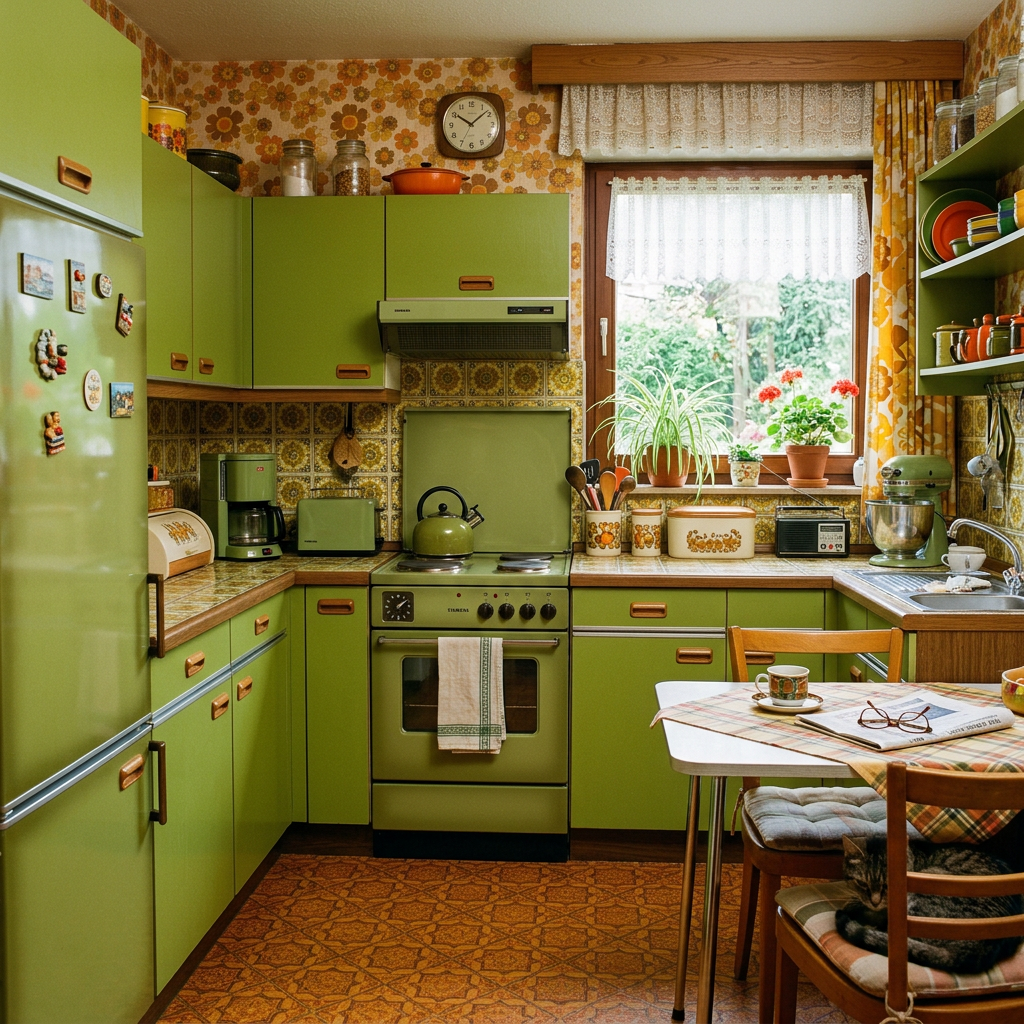
Avocado green and harvest gold. Appliances, bathtubs, and sinks in earth tones were the height of fashion in the 70s. Add brown, orange, and mustard on wallpaper and upholstery, often in large-scale patterns.
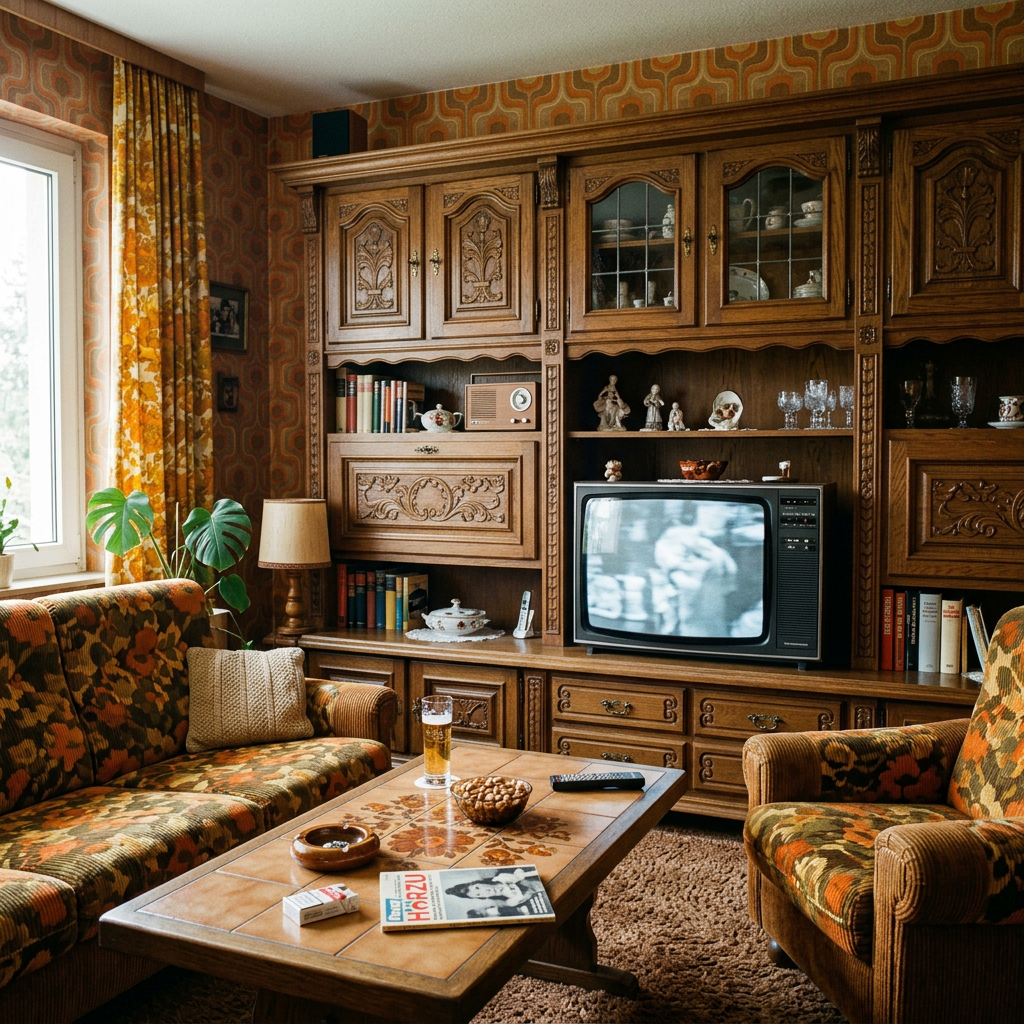
Wood paneling and rustic oak. Walls of dark wood and the massive oak wall unit are part of Germany’s collective memory. They stood for solidity: you bought something that would last a lifetime.
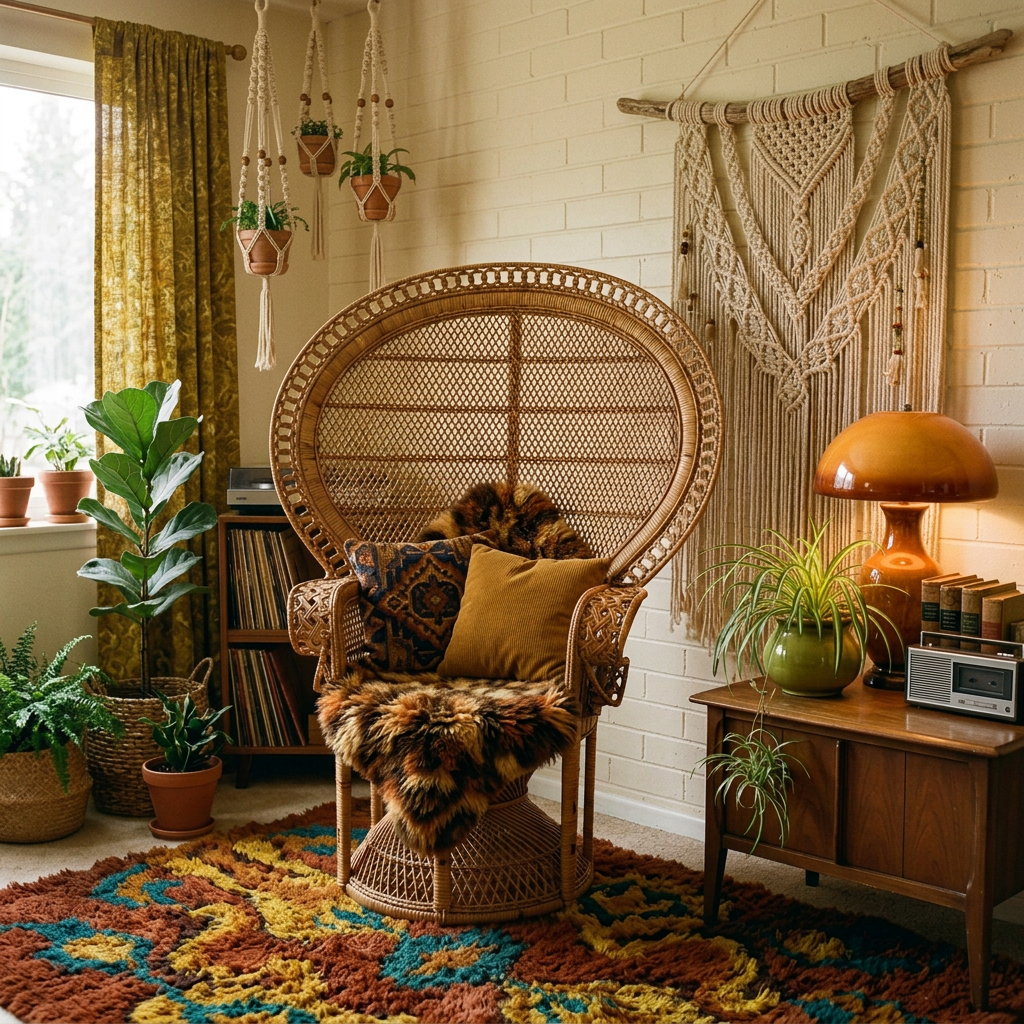
Macramé, rattan, and peacock chairs. Hand-knotted wall hangings, wicker furniture, and the iconic rattan chairs with their tall fan-shaped backs brought nature indoors. Even the lava lamp, invented in 1963, became a symbol of the era.
Why did people live like that?
Trends never appear in a vacuum. The 70s were shaped by upheaval: the 1973 oil crisis showed many how fragile prosperity could be. At the same time, interest grew in nature, self-expression, and private life. Earth tones, natural materials, and soft, enveloping furniture fit a time when people retreated into their own four walls. Home became a cave, a counterweight to an uncertain world outside.
The 80s: Loud, colorful, and against the rules
Then came the backlash. After the coziness of the 70s, people wanted fun, daring, and show.
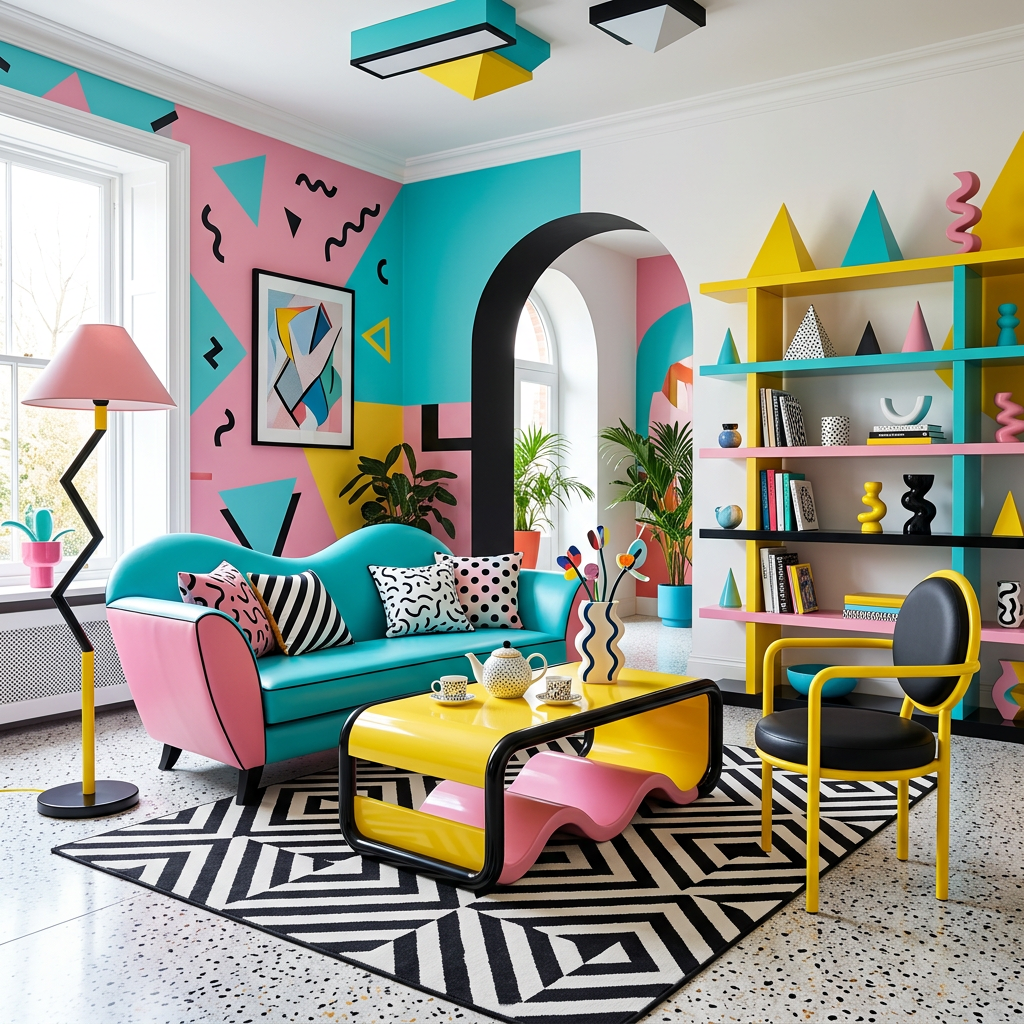
Memphis design. In 1981, designer Ettore Sottsass founded the “Memphis” group in Milan. Their furniture broke with everything that had counted as good taste: bold colors, wild patterns, crooked shapes, plastic laminate. A shelf looked like a figure, a table like a toy. Much of it seemed silly at the time; today, these pieces sit in museum collections and fetch high prices. That may be the best answer to our title question: art or can it go? Both, depending on the decade.
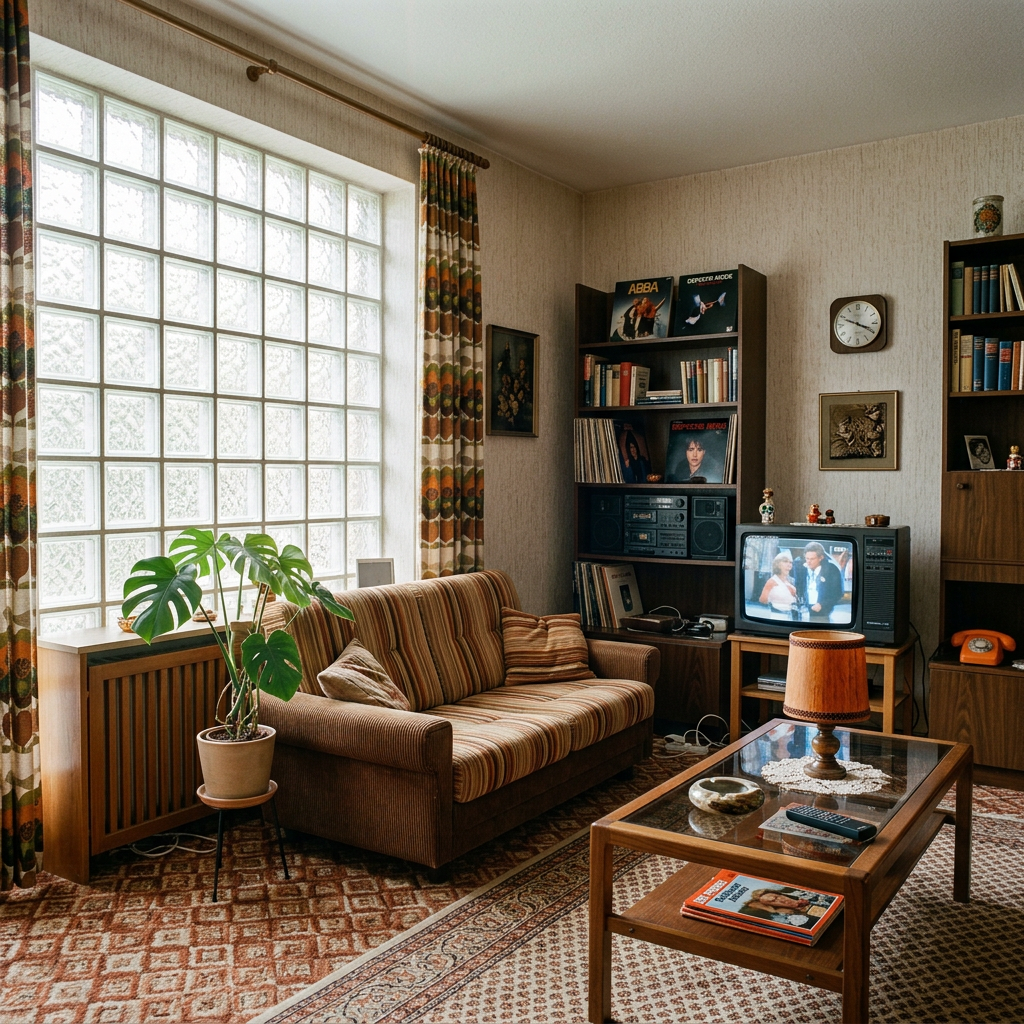
Glass blocks. Known since the 1930s, they made a comeback in the 80s as room dividers, bathroom windows, or hallway walls. They let light through, but not views.
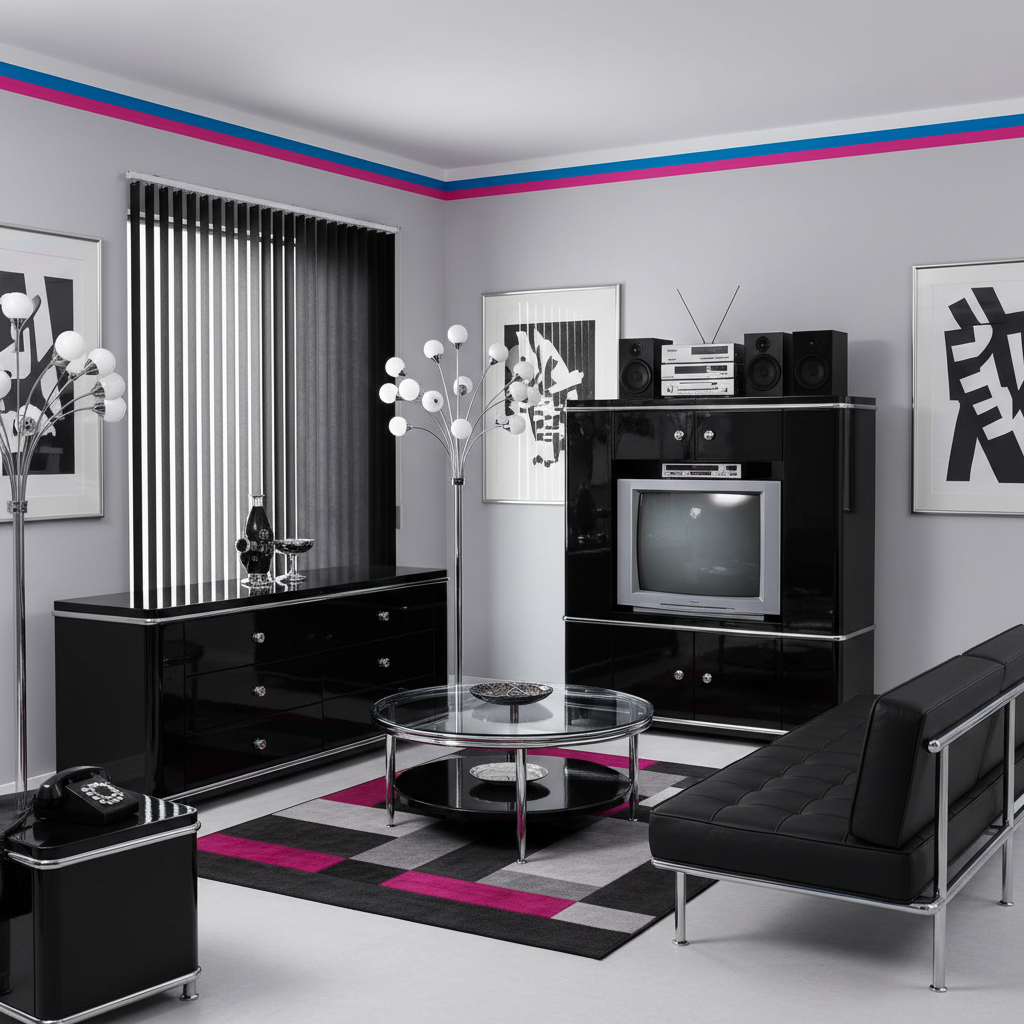
Mirrored walls, black lacquer, and pastels. Black lacquered furniture, mirrored walls, and chrome stood for glamour and big-city life. Alongside them came pastel peach, mint, and turquoise, often paired with neon.
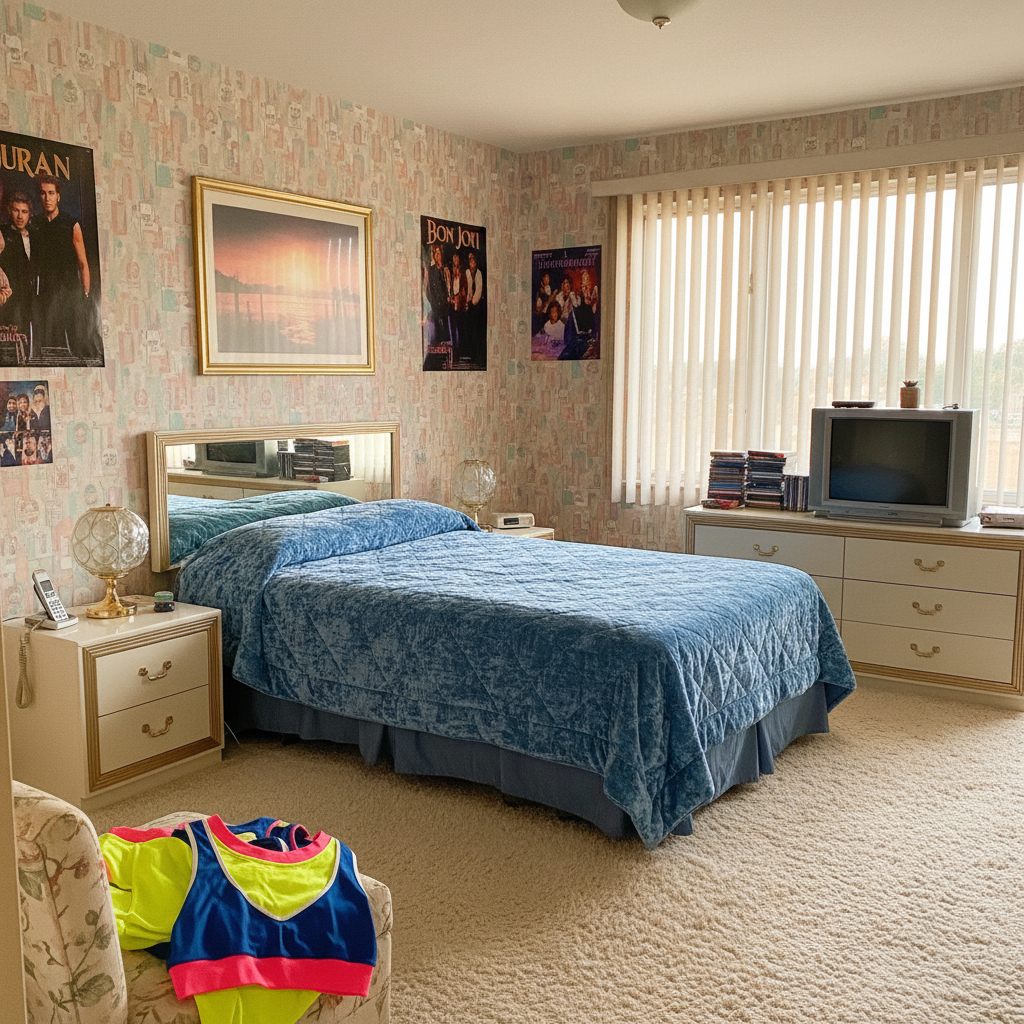
Waterbeds. They were considered the epitome of lifestyle and modernity, until the downsides (weight, maintenance, cold) became common knowledge.
What does this tell us about our own time?
The 80s were the decade of consumption, careers, and self-presentation. The home became a stage on which you showed who you were, an idea that is alive again on Instagram and Pinterest.
And here the circle closes: many elements are coming back. Rattan and macramé are long back in the boho repertoire, earth tones define warm-minimalism homes, and the color joy of Memphis lives on in what we now call dopamine decor. Things usually return in a softened form: the shag carpet as a small rug island, the conversation pit as a deep-seated sofa, the wood paneling as a single accent wall.
What you can take from this
- Dare with single pieces instead of whole rooms. A Memphis-inspired side table makes a statement; an entire 80s living room quickly feels like a costume.
- Natural materials are a safe entry point. Rattan, wood, and wool are the easiest way to bring 70s charm home.
- Ask yourself what appeals to you. Is it coziness, color, nostalgia, or simply the fun of the unusual? Then you can find that feeling in modern versions too.
In the next part, we explore the 90s and 2000s: from sponge-painted walls to wallpaper borders.
part of the circle with heal your mind
Why color and playfulness feel so good at home, and why we sometimes hardly allow ourselves joy, you can read on Heal your Mind: “Why You Don’t Allow Yourself Joy: Anhedonia After Narcissistic Abuse (and How to Bring It Back Step by Step).”
Want a touch of retro at home? In our “Retro Revival” gallery, you’ll find ceramic lamps, shag rugs and colorful accent pieces that bring the charm of the 70s and 80s back in a modern form.
Leave a Reply